Most buyers who contact me about the Coachella Valley open with the same two cities: La Quinta and Palm Desert. Both are excellent. But when the conversation turns to investment return per dollar spent, I keep coming back to a city that rarely shows up in those first messages. Desert Hot Springs sits on the north side of the I-10, about ten minutes from Palm Springs, and it has quietly delivered appreciation that would surprise a lot of people who wrote it off years ago. The buyers paying attention right now are getting in before the next wave of coverage catches up to what is already happening on the ground.
The Price Point Nobody Talks About
In La Quinta, the median home price runs well above $700,000. In Palm Desert it is similar. Indian Wells and Rancho Mirage push higher. Desert Hot Springs sits in a completely different bracket. You can still find single-family homes in the $250,000 to $350,000 range, and investment properties with rental income potential at entry points that simply do not exist anywhere else in the valley.
That gap is not a sign of a broken market. It reflects a city that urbanized later and less densely than its southern neighbors, with more raw land, more modest original housing stock, and less institutional attention until recently. Those are exactly the conditions that historically precede a significant repricing, and Desert Hot Springs is in the middle of one right now.
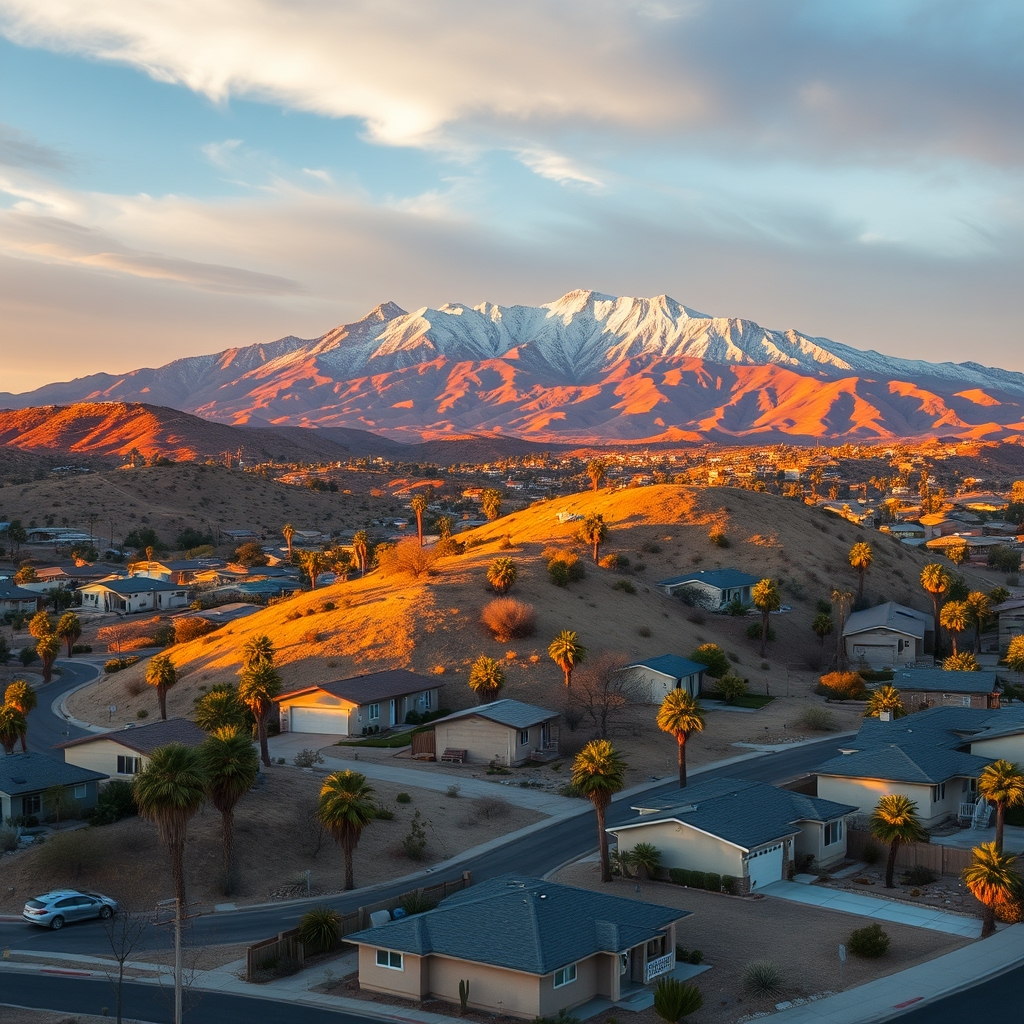
Desert Hot Springs sits at the northern edge of the Coachella Valley, with San Gorgonio Mountain as a dramatic backdrop and entry prices well below neighboring cities.
The Wellness Economy Is Not a Trend Here, It Is Infrastructure
Desert Hot Springs sits directly above one of the largest natural mineral hot springs aquifers in the world. The city has over 1,000 individual wells producing geothermal mineral water, and that geological fact has driven the development of a wellness hospitality sector that keeps growing. Boutique spa resorts, adult-only mineral pool retreats, and wellness-focused short-term rental properties have been opening steadily, and the demographic seeking that experience, health-conscious, travel-flexible, willing to spend on quality stays, is not shrinking.
For real estate investors, this matters in two ways. First, it creates a short-term rental market with a specific and consistent demand profile that differs from the general vacation rental market. A well-positioned Desert Hot Springs property with its own hot tub or mineral-fed pool commands premium nightly rates in a category where supply is still limited. Second, it signals the kind of economic identity that supports long-term property value, a city with something distinct to offer is less vulnerable to the generic market cycles that flatten more interchangeable markets.
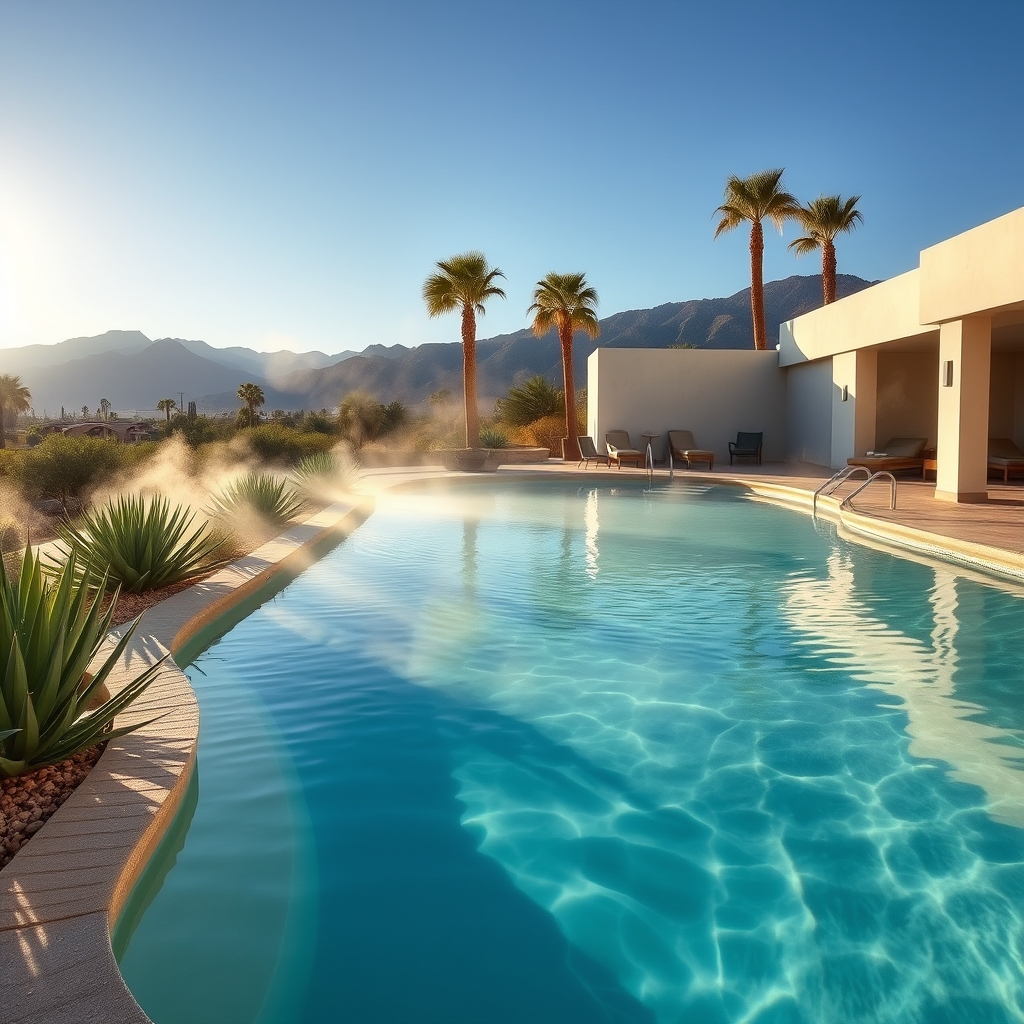
Desert Hot Springs sits above one of the world’s largest natural mineral hot springs aquifers, fueling a growing wellness hospitality sector that drives short-term rental demand.
“The buyers getting into Desert Hot Springs today are doing what smart investors always do: arriving before the story is obvious to everyone else.”
The Cannabis Industry Built a Commercial Tax Base
Desert Hot Springs made early regulatory decisions that positioned it as one of the first California cities to welcome licensed cannabis cultivation and retail. That early-mover stance brought in commercial operators, tax revenue, and a category of business investment that has been harder to establish in cities that moved more cautiously.
The practical effect for residential real estate is indirect but real. Commercial tax revenue funds city services. Better-funded city services support property values. A city that has established a stable commercial economy around a regulated industry is in a stronger fiscal position than one that has not. Desert Hot Springs has used that revenue to improve infrastructure and attract additional business investment, and the trajectory has been upward.
What the Appreciation Picture Actually Looks Like
Desert Hot Springs has posted consistent year-over-year appreciation for several consecutive years. The base was low enough that the percentage gains have been meaningful without pushing the market into unaffordable territory, which means there is still room in the price curve. Compare this to markets like Palm Springs proper, where appreciation has been strong but the entry price is now high enough that the risk-reward on new purchases looks different.
Investors who bought in Desert Hot Springs three to five years ago have seen significant equity growth. The question for today’s buyer is whether the conditions that drove that appreciation are still in place. The wellness economy is still expanding. The cannabis commercial sector is established and generating tax revenue. Palm Springs proximity means the city benefits from the visibility of its more famous neighbor without paying Palm Springs prices. Those fundamentals have not changed.
What You Should Know Before You Buy
Desert Hot Springs is not a finished product. Parts of the city are still working through the infrastructure and commercial development that more established Coachella Valley markets completed decades ago. If you are buying for short-term rental income, the property selection matters more than in more mature markets, because the quality gap between well-positioned and poorly-positioned inventory is wider here. A home with a mineral pool, strong design, and good access will outperform a standard tract home significantly.
Short-term rental regulations in Desert Hot Springs are more permissive than in Palm Springs, but the city has been gradually adding permit requirements and oversight as the STR market has grown. Verify current requirements before closing on any property you intend to rent short-term, and confirm that the specific property is in a zone where STR is permitted.
Longer-term, the city’s growth trajectory depends partly on continued commercial investment and infrastructure improvement. The direction has been positive, but Desert Hot Springs is earlier in its development arc than its neighbors to the south. That is the source of both the opportunity and the risk. Higher upside potential with more moving parts than a La Quinta or Palm Desert purchase.
Questions Buyers Ask About Desert Hot Springs
Is Desert Hot Springs safe to invest in right now?
The investment case is real and the appreciation trend has been consistent. Like any emerging market, the key is property selection. Well-positioned properties in established parts of the city have performed well. The risk is higher than in a mature market like La Quinta, but so is the potential upside. Do your due diligence on the specific property and neighborhood, not just the city in general.
Can I rent my Desert Hot Springs property short-term?
Yes, Desert Hot Springs has historically been more permissive with short-term rentals than Palm Springs. The city has a permit process and regulations that have been evolving, so the current rules need to be verified for any specific property before you close. Properties with mineral pools or spa amenities tend to command significantly higher nightly rates in the wellness tourism segment.
How does Desert Hot Springs compare to Palm Springs as an investment?
Palm Springs has higher brand recognition and a more liquid resale market. Desert Hot Springs has lower entry prices, stronger percentage appreciation from a lower base, and less competition for good inventory. If you are comparing risk-adjusted returns on a budget under $500,000, Desert Hot Springs is worth running the numbers on seriously. If brand recognition and ease of resale are your primary criteria, Palm Springs has the edge.
What type of property performs best in Desert Hot Springs?
For short-term rental investors, properties with a private mineral pool or hot tub, good design, and at least two bedrooms consistently outperform standard inventory. The wellness traveler visiting Desert Hot Springs specifically is looking for that experience, and properties that deliver it can achieve nightly rates that make the investment math work well. Standard tract homes without those amenities compete in a more commoditized rental segment with thinner margins.