I have had the Mello-Roos conversation more times than I can count. A buyer comes in pre-approved, falls in love with a home in one of the newer communities, and then sees the property tax estimate for the first time. The number is often significantly higher than they expected, and the confusion on their face is almost always the same. Mello-Roos is one of the most frequently misunderstood parts of buying a home in California, and in the Coachella Valley it shows up often enough that every buyer needs to understand it before they start shopping seriously.
What Mello-Roos Actually Is
Mello-Roos is a special tax levied on properties within a Community Facilities District, commonly called a CFD. California created the legal framework for these districts in 1982, and they became a primary tool for financing infrastructure in newly developed communities throughout the state. The name comes from the two legislators who authored the original bill: Senator Henry Mello and Assemblyman Mike Roos.
Here is the basic mechanics. A developer builds a new community. That community needs roads, sewers, water lines, schools, parks, and other infrastructure. Instead of the developer paying for all of it upfront, a CFD is formed. The CFD issues bonds to cover the infrastructure costs, and those bonds are then repaid over time through a special tax assessed on the properties within the district. That special tax is what shows up on your property tax bill as Mello-Roos.
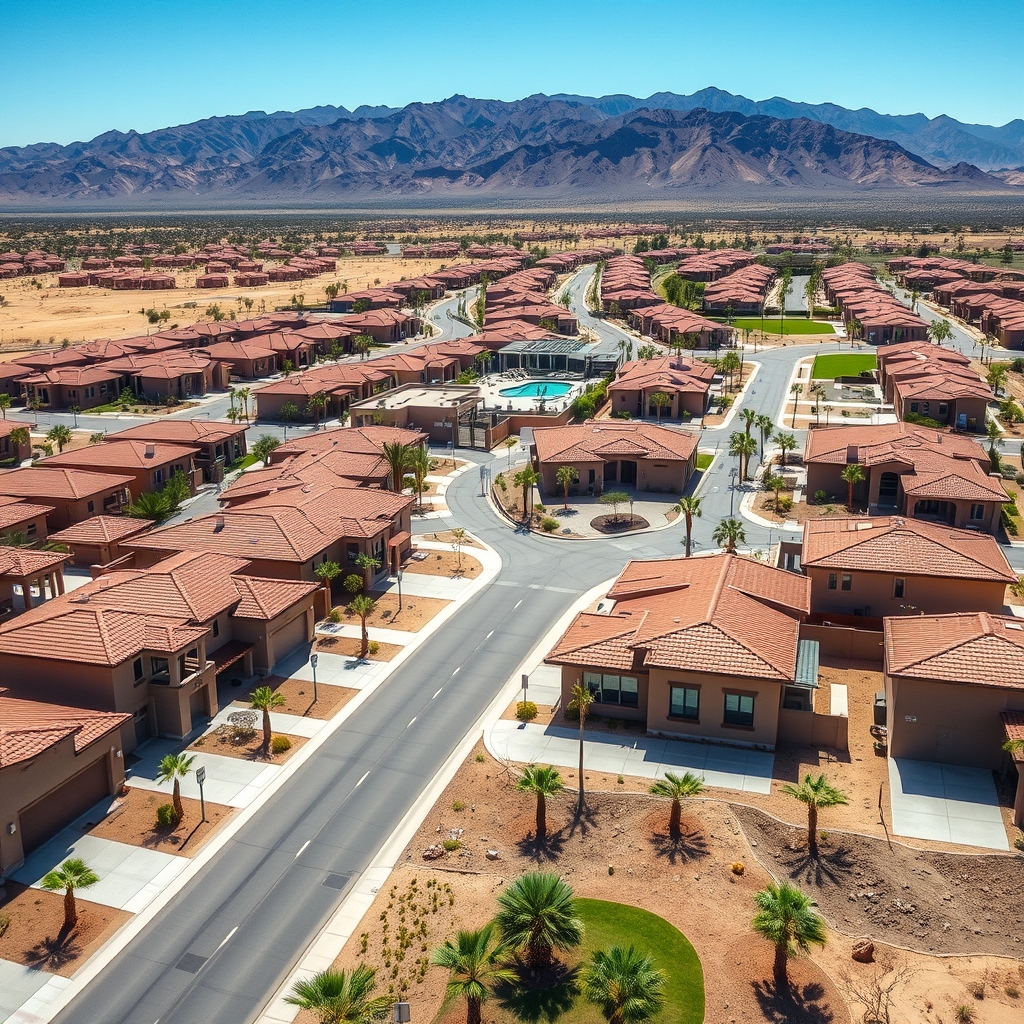
Newer master-planned communities in the Coachella Valley frequently carry Mello-Roos assessments, which funded the roads, utilities, and infrastructure that made the development possible.
How Much Does It Actually Add to Your Tax Bill?
This is the number buyers want first, and the honest answer is that it varies considerably by community and by the specific phase of development the property sits in. In the Coachella Valley, Mello-Roos assessments on newer homes commonly range from around $1,500 to over $5,000 per year, added on top of your base property tax.
To put that in practical terms: a home with a base property tax rate of around 1.1 percent and a Mello-Roos assessment of $3,600 per year is effectively carrying a total annual tax obligation that works out to a significantly higher effective rate. For a $500,000 home, your base property tax might be around $5,500. Add $3,600 in Mello-Roos and your total annual tax payment approaches $9,100. That translates to roughly $758 per month in property taxes alone, which your lender will factor into your debt-to-income calculation when determining how much you qualify to borrow.
The specific amount for any property is disclosed in the NHD (Natural Hazard Disclosure) report, which sellers are required to provide in California transactions. The CFD information appears there. Your agent should pull this report early in the transaction so you know the number before you are emotionally committed to the property.
“The Mello-Roos number is not hidden. It is disclosed. But buyers who do not know to ask for it often find out at the wrong moment in the process.”
Which Coachella Valley Communities Have It?
Mello-Roos is concentrated in newer developments, particularly communities built after the mid-1980s. In the Coachella Valley, you are most likely to encounter it in:
- Indio and Coachella — many of the newer master-planned communities on the east end of the valley carry CFD assessments that funded significant infrastructure buildout
- Newer La Quinta developments — particularly communities built in the late 1990s through the 2010s in the southern and eastern portions of the city
- Thermal and surrounding areas — newer residential developments in the agricultural transition zones
- Some newer Palm Desert and Cathedral City communities — though less common than on the east end of the valley
Older established communities, most of Palm Springs’ original neighborhoods, established areas of Palm Desert and Rancho Mirage, and older La Quinta communities generally do not carry Mello-Roos. The age of the development is your first signal, but it is not a guarantee either way. Always verify on the specific property.

Reviewing the NHD report and CFD disclosure with your agent early in the transaction ensures the Mello-Roos amount is known before you are emotionally committed to a property.
When Does Mello-Roos End?
CFD bonds are issued with a set term, typically ranging from 25 to 40 years from the date of issuance. Once the bonds are paid off, the Mello-Roos assessment ends. For some older CFDs in early-developed communities, the assessment period is winding down or has already ended. For communities built more recently, buyers may be looking at 20 or more years of remaining assessment.
The remaining term is a legitimate factor in evaluating a property. A home with 8 years of Mello-Roos remaining is a different financial proposition than one with 32 years remaining, even if the annual amounts are similar. This information is available in the CFD documents and your agent or a title company can pull the specifics for any property you are seriously considering.
One thing worth noting: the annual Mello-Roos amount is generally fixed or adjusts only modestly over time, it does not increase with your assessed property value the way base property taxes can increase on reassessment. That predictability is at least one point in its favor once you know the number going in.
How It Affects What You Can Borrow
This is the piece buyers most often overlook until it is too late. When your lender calculates your debt-to-income ratio, they use the full projected monthly housing cost, which includes principal, interest, homeowners insurance, HOA fees, and property taxes. If your property tax estimate is being calculated without accounting for the Mello-Roos, the pre-approval amount your lender gave you may not hold once the actual tax obligation is factored in.
Buyers who are stretching their budget need to run the actual numbers with Mello-Roos included from the start. A $3,600 annual Mello-Roos assessment adds $300 per month to your housing cost. At a debt-to-income limit of 43 percent, that $300 per month can reduce your maximum purchase price by $50,000 or more depending on your income and other obligations. Know the number before you fall in love with the property.
- Ask your agent to pull the NHD report on any property you are seriously considering
- Look for CFD (Community Facilities District) listings in the tax section of the disclosure
- Ask the listing agent directly: “Is there a Mello-Roos assessment on this property?”
- Request the full CFD disclosure document to see the annual amount and remaining term
- Factor the annual amount into your monthly payment calculation before making an offer
Questions Buyers Ask About Mello-Roos
Is Mello-Roos tax deductible?
The deductibility of Mello-Roos depends on what the tax funds. Assessments that go toward services (fire protection, maintenance) are generally not deductible. Assessments that fund improvements to real property may be partially deductible. The rules are nuanced and the IRS applies them case by case. Consult a tax advisor for guidance on your specific CFD before making assumptions about deductibility.
Can I pay off Mello-Roos early?
In many cases, yes. Some CFDs allow property owners to make a lump-sum prepayment to satisfy their share of the outstanding bond obligation. This can eliminate the ongoing annual assessment. The prepayment amount is typically calculated by the CFD administrator and will vary by property and by how much of the bond has already been paid down. If you are buying a newer home and want to eliminate the ongoing tax obligation, ask about prepayment options during escrow.
Does Mello-Roos affect resale value?
It can, because buyers who understand it will factor the ongoing tax cost into what they are willing to pay. In communities where Mello-Roos is common and well understood, like many newer master-planned developments, it tends to be priced into the market and does not uniquely penalize any one property. In areas where it is rare, a buyer encountering it for the first time may view it as a negative. The main protection is full transparency: disclose it clearly and price the property accordingly.
Do all new construction homes in the Coachella Valley have Mello-Roos?
No, not all of them. Whether a new community carries a CFD depends on how the developer structured the infrastructure financing. Some developers pay for infrastructure upfront and do not create a CFD. Others use CFDs routinely. You cannot assume either way based on the age of the home alone. Always verify on the specific property through the NHD report and CFD disclosure.