The question I hear most from buyers and sellers right now is some version of the same thing: is the market slowing down? The short answer is that parts of it are, and parts of it are not. Inventory has risen in several valley cities, prices have softened modestly from their 2025 peaks, and homes are sitting on the market longer than they were a year ago. At the same time, sales volume in April 2026 hit the highest April count the valley has posted in at least three years. That combination does not fit neatly into either the “it’s crashing” or “it’s still a seller’s market” stories you will read online. The reality is more specific, and more useful, than either of those takes.
Here is what the actual data shows, and what it means for anyone buying or selling in the Coachella Valley over the next six months.
What the Numbers Actually Show
Valley-wide inventory at the end of May 2026 was 3,358 homes, down 8 percent from the same point a year earlier. In April, total inventory sat at 3,557 homes, a 3 percent decrease from April 2025. These are not the runaway inventory increases that signal a collapsing market. The valley is moving toward balance, not into freefall.
On pricing, the picture is more nuanced. The median price of a detached home in March 2026 was $690,000, down from $710,000 in March 2025, a decline of roughly 2.8 percent year over year. By June 2026, the valley-wide median sale price had eased to $582,500, which was down about 1.7 percent from May and down 3.7 percent from June of the prior year. Those are real decreases, but they are measured declines, not a repricing event.
The most telling number is sales volume, not price. April 2026 saw 702 closed sales of detached and attached homes valley-wide, up 7.83 percent from 651 sales in April 2025. Buyers are still buying. They are just taking more time, negotiating harder, and passing on properties that are not reasonably priced.
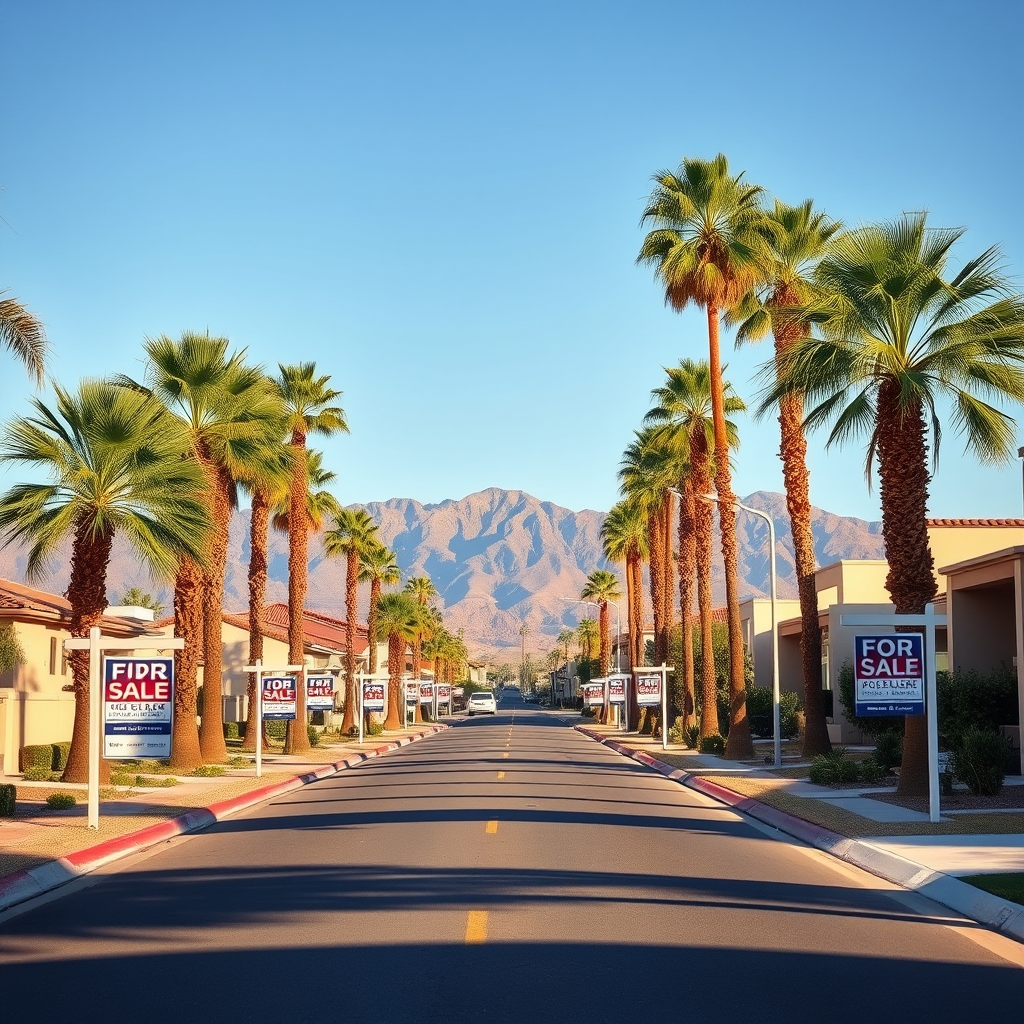
Inventory has ticked up in several valley cities, but the pace of sales has actually increased year over year, suggesting the market is rebalancing rather than retreating.
Where It Has Softened and Where It Has Not
The Coachella Valley is not one market. It is ten cities with meaningfully different buyer profiles, price points, and inventory dynamics. Treating valley-wide data as if it describes any specific neighborhood is one of the most common mistakes buyers and sellers make.
In the luxury segment, particularly homes in the $800,000 to $3 million range in cities like Indian Wells, Rancho Mirage, and La Quinta’s gated communities, days on market have stretched noticeably. Buyers in that segment have more options than they did in 2024 and early 2025, and they are using that leverage. Properties that are overpriced are sitting 90 to 120 days or more. Properties that are priced correctly for current conditions are still moving in under 30 days in many cases.
Entry-level and mid-range homes in Indio, Coachella, and Cathedral City are telling a somewhat different story. Demand from first-time buyers, investors, and relocators remains active in those price bands, and inventory is thinner relative to demand than in the upper tier. If you are selling a well-maintained home under $550,000 in a desirable neighborhood in those cities, you are in a better position than the valley-wide data suggests.
“The buyers who are in the desert right now are serious. They are not browsing. They are making decisions based on what the numbers actually support, and the sellers who understand that are closing.”
Why Out-of-State Demand Is Keeping the Floor In
One of the things that makes the Coachella Valley behave differently from most California markets during a slowdown is the composition of its buyer pool. A significant share of purchases here are second homes, investment properties, and retirement relocations from out of state. Those buyers are not responding to local school calendars, commute times, or the same economic pressures that drive demand in a primary-residence market.
Relocators from high-tax states like California’s coastal metros, Washington, and states with harsh winters are still finding the Coachella Valley’s combination of price, lifestyle, and climate compelling. That demand does not evaporate the way primary-home demand does when rates or uncertainty rise. It slows, but it stays present, and it is one of the structural reasons the valley tends to see price floors hold better than markets where the buyer pool is more homogenous.
Second-home and investment buyers are also more likely to be cash purchasers or carry large down payments, which insulates them from rate sensitivity. In a market where higher mortgage rates are suppressing demand from rate-dependent buyers, cash buyers become a larger share of total transactions, which stabilizes pricing at the high end.

Buyers in 2026 are taking more time and asking sharper questions. The deal still gets done when the price reflects what the market will actually support.
What This Means If You Are Buying in the Next Six Months
This is the best buying environment the Coachella Valley has offered in at least three years. You have more inventory to choose from, sellers who have adjusted their expectations, and less competition from other buyers than during the frenzied years of 2021 through 2023. The urgency that drove overbidding and waived contingencies has largely dissipated.
That does not mean everything is a bargain. Well-priced, well-presented homes in desirable communities are still moving. But you can take time to review your options, write a reasonable offer with standard contingencies, and negotiate without the anxiety of losing the property to five other competing offers. That shift is significant, and buyers who were priced out or burned out during the frenzy years should take another look.
- Request inspection contingencies — sellers are accepting them again
- Ask for seller credits on older systems (HVAC, roof, pool equipment)
- Pull comps from the last 60 days, not 90 — prices are moving
- Focus on price per square foot relative to recent closings in that specific community
- Get fully pre-approved before making offers on homes you are serious about
- Overpriced homes are sitting 90 to 120+ days in the current market
- Price reductions signal weakness and invite lower offers
- Professional photography and staging are not optional at current inventory levels
- Have your disclosures ready before you list to reduce friction in escrow
- Know your competition — check active listings in your neighborhood every week
What This Means If You Are Selling in the Next Six Months
The sellers who are struggling right now share one characteristic: they are pricing for 2024 in a 2026 market. A home that would have sold at a given price 18 months ago may require a 5 to 8 percent adjustment to move in the current environment. That is not a disaster. It is an adjustment. Sellers who make that adjustment early, before the property develops a stale listing history, are closing. Sellers who resist it are sitting on expired listings.
Presentation also matters more than it did during the peak years. When buyers had two or three options and eight competing offers, they overlooked deferred maintenance and dated finishes. Now they have fourteen options and they are comparing carefully. A home that shows well, has clean disclosures, and is priced accurately for its condition and location will sell. The bar for “shows well” has gone back up to where it was before the pandemic accelerated everything.
Track active inventory in your specific zip code, not the valley-wide figure. If inventory in your neighborhood is under 2 months of supply, you are still in a seller-favorable environment regardless of the broader headlines. If it is above 4 months, price accordingly. Your agent should be pulling this number for you weekly once you are listed.
Questions Buyers and Sellers Are Asking Right Now
Are Coachella Valley home prices going to drop more in 2026?
The data through mid-2026 shows modest year-over-year price declines of roughly 2 to 4 percent across the valley, concentrated in the mid-to-upper price ranges where inventory has increased the most. A significant price collapse would require either a major spike in distressed listings or a sustained collapse in demand, and neither is currently visible in the data. Out-of-state relocators and second-home buyers continue to provide a demand floor that primary-residence markets do not have. The more likely scenario over the next six months is a continued slow moderation, not a correction.
Is now a good time to buy in the Coachella Valley?
For buyers who have been waiting for better conditions, yes. You have more inventory, less competition, and sellers who are negotiating in a way they were not during 2021 through 2023. The trade-off is that mortgage rates remain elevated relative to the pandemic lows, which affects your monthly payment even if purchase prices are softer. If you plan to hold the property for five or more years, the current entry point looks favorable relative to the peak years. If you are hoping to flip quickly, the market is less forgiving than it was.
How long are homes sitting on the market in the Coachella Valley right now?
Valley-wide, average days on market has risen to approximately 71 days, up from around 63 days a year ago. That average masks a wide range. Turnkey, well-priced homes in premium communities can still go under contract in under 30 days. Properties that are overpriced, in less desirable locations, or have deferred maintenance issues are sitting 90 to 120 days or longer. The gap between well-prepared and poorly-prepared listings has widened significantly compared to the frenzy years when almost everything sold regardless of condition.
Should I wait to sell or list now?
Timing the market is usually less valuable than pricing it correctly. A well-priced home in the current environment will sell. If you wait hoping for a price recovery, you are making a bet that rates will drop enough to bring more buyers back into the market or that out-of-state demand will intensify. Those things could happen. They are not guaranteed on any particular timeline. The sellers who are winning right now accepted the current market, priced accordingly, and closed. The sellers who are waiting for a better market are watching their carrying costs accumulate.